

What will determine our fate when the stuff hits the fan, the organic free-trade lattes stop arriving, and our frequent flyer card has expired? Will it be technology that mediates whether we live and die when the last Prime package has plopped on our doorstep, and Walmart is full of zombies? Would solar panels, a generator, and a bank of batteries keep us alive? How about guns, organic gardens, and an enormous stash of ramen noodles? What, me worry, you say? Alas, all civilizations end, and our planet-wrecking global civilization is due for a crash beyond our wildest nightmares. IF you and your loved ones are to have any chance at all, the key to survival is not gardens, ammo, canned goods, nor the illusion of an “off the grid” power supply, but community. Whether you and your neighbors exist in a world of trust, or of fear.
Humans are by far the most dangerous animals to ever walk the Earth. Far more dangerous than polar bears, lions, or even T. rex, were they to leap forth from the immortal Jurassic Park movie franchise. When life becomes a game of musical planet — far too many humans circling far too few resources — it is our relationships with the people that will determine our fate. In a time when technology and its addictive, ugly algorithms are driving us toward alienation and cruel tribalism, we would do well to remember that no person is an island and no human can long survive without each other. It is a verifiable delusion that humans ever lived as “libertarians,” i.e., self-directed, independent monads each making their own choices, not even three million years ago when we were chimps. Cooperation, community, and teamwork are how humans have come to dominate the entire planet, for better or for worse. (Mostly for worse, from the planet’s point of view.) When collapse arrives, as it will for a species that has overshot the biological carrying capacity of the Earth by orders of magnitude, only those who connect and collaborate stand a chance. When empire ends, empathy, or the lack thereof, will determine what happens next.
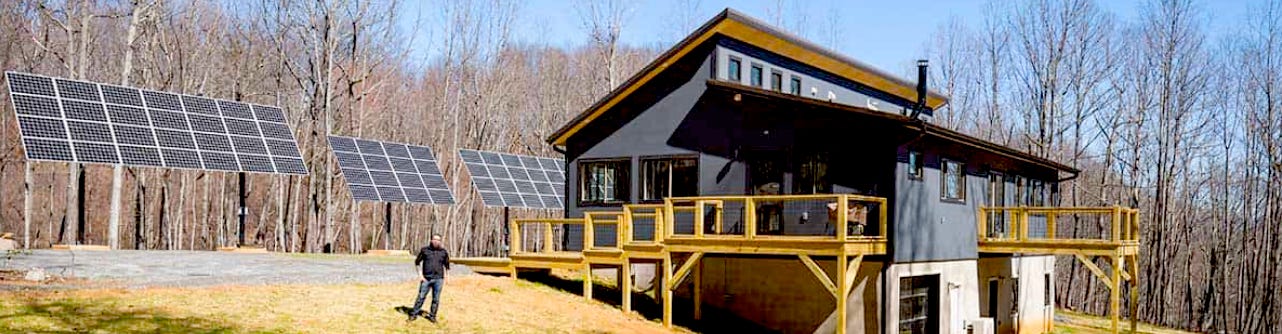
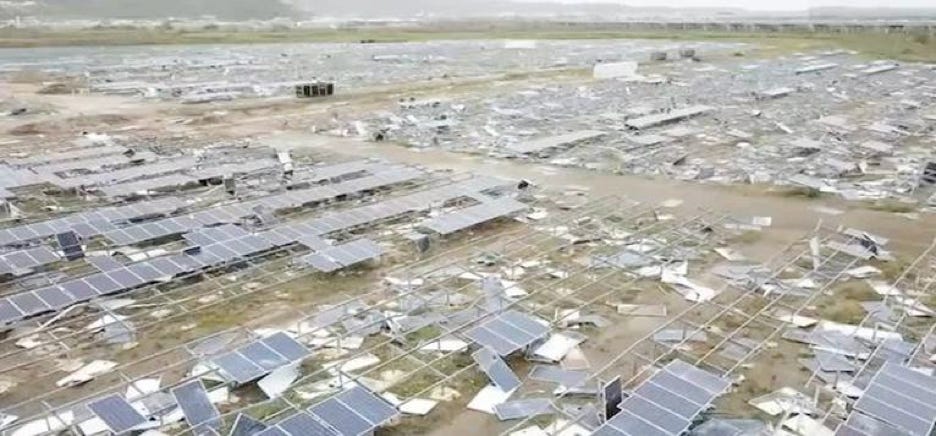
One of the things that will be rapidly off the table when our overblown planet-wrecking, fossil-fuel based, global industrial civilization fails, is technology. We’ve been snookered into believing products of global industrial-techno systems have something to do with “sustainability.” We are in for a rude awakening. What happens when a hail storm or falling tree destroys some or all of our solar array? Where exactly in a post-industrial world are we going to get a new solar panel, except by raiding someone else’s stash? We’re not. Few greater delusions exist than “renewable” technologies and attendant infrastructure, such as batteries and inverters, have anything to do with self-reliance or “local” energy. They are the opposite, requiring an entire planet’s worth of mining and smelting; dozens, if not hundreds, of specialized materials and the experts that go with them; and an almost incomprehensible maze of processing and manufacturing. It may take a village to raise a child, but it takes a planet to raise a solar panel. Nuclear power is also extraordinarily complex and will not survive global techno-industrial collapse. Even fossil fuels are becoming ever more difficult to obtain, as are all the mined materials upon which civilization depends. The easy-to-get oil, coal, gas, copper, nickel, iron, tin, aluminum, rare earths, and much more have already been tapped out; hence our “leaders” insane interest in plundering the deep sea or dragging asteroids back to Earth in a desperate attempt to sustain the unsustainable.
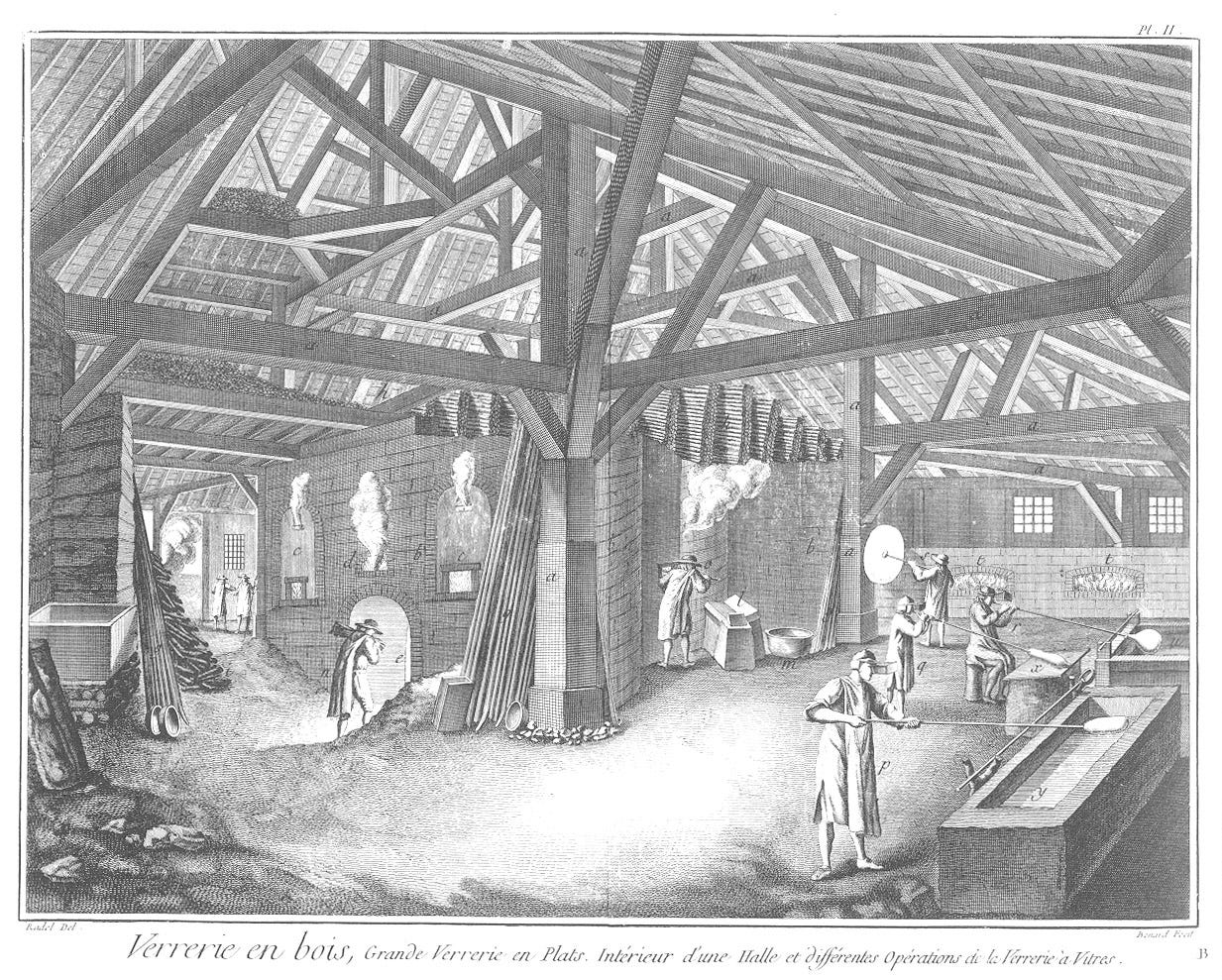
If replacing a solar panel when things fall apart will be impossible, consider this: without a functioning society, you’re going to have a difficult time replacing a piece of glass. Since the key ingredient of glass is sand, it would seem trivial to manufacture on the homestead. Not so. Even this “low-tech” material is a product of a complex culture and generations of chemical and industrial learning. Many past civilizations struggled to get it right, or never figured it out. Not just any sand or additives will do, and they are often imported from other regions or nations. Then too, you need the capacity to build an industrial furnace reaching 1000 degrees Fahrenheit, and the ability to supply 150 to 200 pounds of wood for every pound of glass produced. Medieval glassworks frequently had to be moved as they depleted nearby forests. Thus, even having a piece of glass will not only require a local community but a larger culture that nurtures cooperation, intergenerational learning, and mutual protection. When civilizations fall, the first thing to go is glass windows, smashed to bits by raiders and vandals.
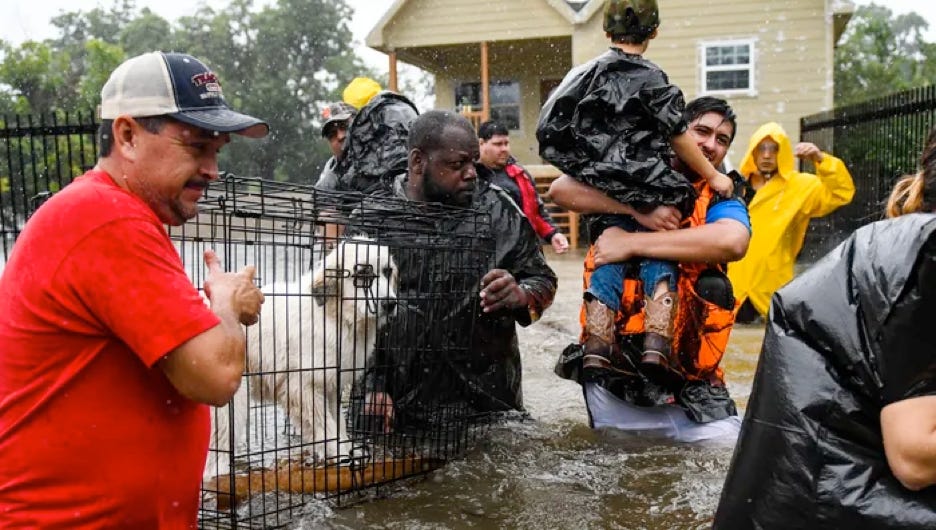
The question before us is, then, not whether we have enough AK-47s, solar panels, or diesel generators, but whether we have a culture of mutual aid. Is it all for one, and one for all, or is it “every man for himself?” Will unspeakable violence dominate as it does in so many failed and failing states, or will altruism reign, as sometimes happens during natural disasters?
Perhaps counterintuitively, the presence of weapons and hoarded goods when the times are “dog-eat-dog” will not save you, but will make you a target. Long ago, while working as a researcher for Bowling for Columbine, I learned that people with gun or even knife collections were often killed for their stash of weapons. In a full-blown, uncontrolled collapse, there is no scenario in which a lone individual or family can fight off those who need what they are hoarding to stay alive. It might seem like a tempting proposition to run to the hills, a fantasy I share, but we fail to grasp the extremity of human overshoot. Millions, even billions, will not sit home and starve or freeze to death. They are coming. Flea-infested, hungry, impoverished Europeans crossed an ocean in wooden, leaky boats and raided an entire continent rather than perish at home. On a planet with now billions of humans, our only shot is in taking care of each other so that the coming collapse is slow and equitable.
When people realize how they have been brainwashed into believing technology is our friend and savior by bankers and billionaires, there is going to be hell to pay. The first thing the elite will do is cut us off from the laughable concept of “social” media and digital systems, so that we cannot organize electronically against them. Person-to-person and low tech will be our only hope. Printing presses and radio. Smoke signals. Well before then, we ought to find out who are neighbors are, connect with them, and reconnect with family. We need to drop the pretense that any group of people is inherently more intelligent, empathic, or greedy than any other. All of us are capable of great deeds of altruism and sacrifice; all of us are capable of blind violence and selfish greed.
We humans are orders of magnitude beyond overshoot. A global collapse of an extremity no one is able to visualize, much less fully prepare for, is coming. (If you are a non-human, collapse has already arrived courtesy of homo sapiens.) Hunkering down in a “self-sustaining” bunker is impossible, and in the long run, even living in community, as critical as it is, is necessary but not sufficient. We need a way for all humans to take care of each other as our economy and population hit reverse. Our relationship with the natural world must and will be reset — we can do it voluntarily, with foresight, or we can let pandemonium rule, a situation in which the living will envy the dead. Part of that great reset must necessarily be resetting our relationships with each other. The end of trillionaires and billionaires. No two or three houses when others have none. No flights around the world when others cannot stay warm. We are all in this together. We can start now, in this time of alleged comfort and joy. Screw the shopping and get to know your neighbors, family, and “enemies.” Your life, and everyone else’s, may depend upon it.
I was really pleased to have stumbled on your presence here. I was very impressed with your film, and recommended it to a climate-activist friend. I hadn't expected the response I got.
He was "enraged", misinterpreting (as many apparently have) your message as one of climate-breakdown denialism. He clings to techno-fixes, including geoengineering, and won't acknowledge overshoot. It feels a bit bizarre to say this, but it's actually a relief to encounter some collapse-aware people on this platform. In my personal life, I know precisely one.
I'm looking forward to your next film.
Thanks for sharing your valuable thoughts, Jeff!
Two comments from an european (without a boat to cross the ocean!): a) if so many people will die, there will be enough windows and lots of other things and b) because you mentioned nuclear power plants – this seems the biggest thread of all, because if there will be no one left to cool the nuclear waste, it will start burning. And soon the whole world will be filled with radioactive clouds.
Maybe this is, what nature sees as a kind of solution: To erase the dominant, cruel species and make room by eliminating every one who is not able to tolerate radioactivity?